Individuality
Core Curriculum–Freedom of Thought
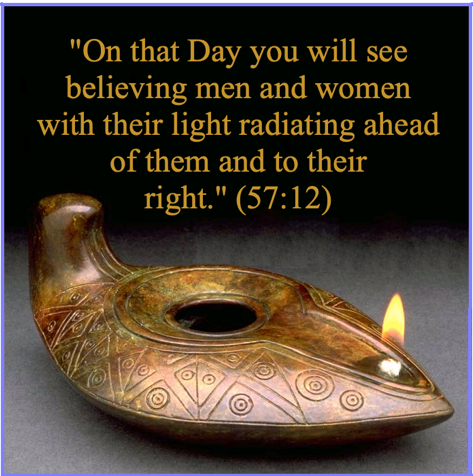
Aisha College teaches that every believer is an individual and that individuality is Allah’s handiwork. You were not given a generic light — rather a singular light that is yours alone. Your light was calibrated before your birth, designed for your path, intended for the sisters and brothers only you can illuminate.
Consider the myriad forms of lamps in the world: the fireproof lamp engineered for combustible environments, the tiny keychain light sized precisely to illuminate a keyhole in the dark, the spotlight that reveals a single object with perfect clarity, the lighthouse whose singular beam reaches across miles of open darkness. Every lamp is different. Every lamp was designed by The Designer with a specific purpose in mind.
That is why Aisha College does not teach you what to think — it teaches you how to think. The former is indoctrination; the latter is education. The beginning of all genuine Islamic scholarship is the discovery of your own Allah-given light. Before you can illuminate others, you must know what kind of lamp you are. Before you can lead a jama’ah, you must have walked honestly in your own light long enough to trust it. The imam who stands before her congregation does not stand there as a vessel of someone else’s certainty. She stands there as a woman who has done the hard, honest, Qur’anically-grounded work of discovering who Allah made her to be — and having found it, had the courage to let it shine.
Upon completing your education, Aisha College empowers you to teach and lead from your own foreordained light — Divine illumination expressed through your singular voice, your singular gifts, your singular calling in these areas:
Liturgical Leadership
1. Leading the five daily Salah in congregation
2. Delivering the Friday Khutbah (sermon)
3. Leading Tarawih prayers during Ramadan
4. Officiating Eid al-Fitr and Eid al-Adha prayers
5. Leading Janazah (funeral) prayers
Pastoral Care
6. Counseling individuals and families in crisis
7. Visiting the sick and dying
8. Supporting the bereaved through grief
9. Mediating family and community conflicts
10. Providing spiritual direction and mentorship
Educational Leadership
11. Teaching Qur’anic recitation and interpretation
12. Instructing in Islamic jurisprudence and ethics
13. Leading adult Islamic education classes
14. Mentoring youth in faith formation
15. Training future Muslim leaders and scholars
Community Administration
16. Overseeing mosque operations and programs
17. Building interfaith relationships and dialogue
18. Representing the Muslim community publicly
19. Coordinating charitable and social justice initiatives
20. Supervising Islamic rites of passage — marriages, conversions, naming ceremonies
Spiritual Authority
21. Issuing religious guidance on community matters
22. Preserving and transmitting Islamic tradition
23. Interpreting the Qur’an and Sunnah for contemporary life
24. Modeling taqwa and Islamic character
25. Serving as a living embodiment of prophetic values
26. Performing Islamic marriage ceremonies (nikah) and officiating converts’ declarations of faith (shahada)